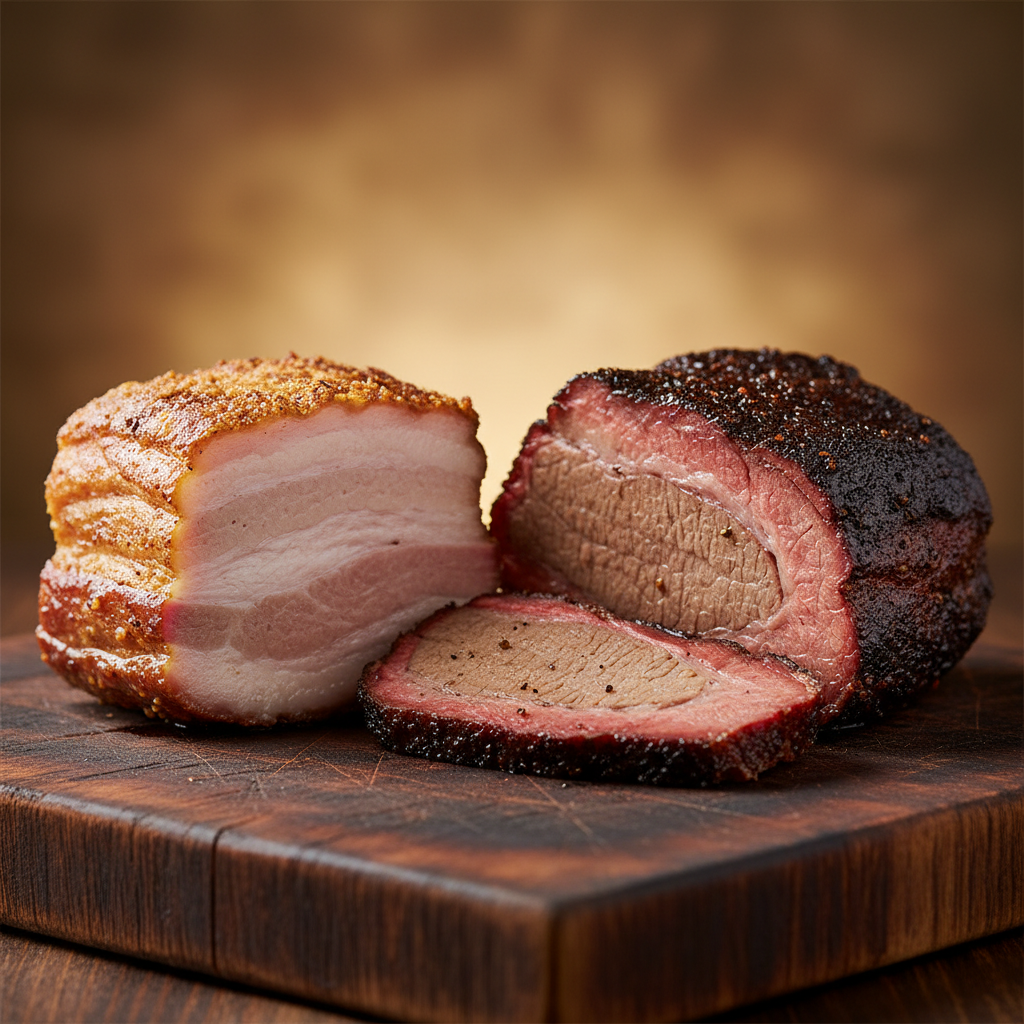
When it comes to slow-cooked, smoky perfection, two cuts of meat often battle for the top spot: pork belly and brisket. Both offer incredible flavour and a melt-in-your-mouth texture when prepared correctly, but they bring distinct characteristics to the smoking arena. Understanding these differences is key to choosing the right cut for your next barbecue adventure.
Did you know that the global pork market is valued at over $250 billion annually, with pork belly being a highly prized cut in many cuisines? Source: Statista. Brisket, on the other hand, has a deep-rooted history in American barbecue, particularly in Texas.
The Contenders: A Closer Look
Pork Belly
Pork belly is the cut that yields bacon, but when smoked whole, it becomes a rich, decadent treat. It’s characterised by its high fat content, which renders down beautifully during the smoking process, basting the meat and creating an incredibly moist and tender result.
- Texture: Extremely tender, buttery, and succulent due to its generous marbling.
- Flavour: Rich, porky, and slightly sweet. The rendered fat contributes significantly to its overall taste.
- Smoking Time: Generally smokes faster than brisket due to its smaller size and higher fat content. A typical pork belly might take 4-6 hours to smoke.
- Versatility: Can be sliced thick for a standalone smoked meat experience, cubed for appetisers, or even re-formed and sliced for a “burnt ends” style preparation. It’s a star in dishes like Chinese braised pork belly.
Brisket
Brisket comes from the chest of the cow and is known for its toughness, which is precisely why it’s a perfect candidate for low-and-slow smoking. The long cooking time breaks down the tough connective tissues, resulting in a tender, flavorful, and iconic barbecue staple.
- Texture: When smoked correctly, brisket is tender and moist, with a distinct “pull-apart” quality. The bark (the dark, flavorful crust on the outside) is a highly sought-after element.
- Flavour: Deep, beefy, and savoury. The smoke penetration plays a crucial role in its characteristic flavour profile.
- Smoking Time: Brisket is a time commitment. It can take anywhere from 8 to 18 hours, or even longer, depending on the size and the smoker’s temperature. According to the USDA, proper cooking temperatures are essential for food safety, and slow cooking helps achieve this for tougher cuts.
- Versatility: Most commonly sliced and served as a centrepiece of a barbecue platter, but also excellent in chopped or shredded form for sandwiches.
The Verdict: It Depends on Your Preference
So, which makes the better smoked meat? The answer truly lies in what you’re looking for.
If you crave an unctuous, melt-in-your-mouth experience with a rich, fatty flavour, pork belly is likely your winner. Its shorter cooking time also makes it a more approachable option for those with less time.
However, if you appreciate the deep, savoury essence of beef, the challenge of a long smoke, and the satisfaction of achieving that perfect bark, then brisket is your champion. Brisket is a quintessential part of American barbecue culture, with many pitmasters dedicating their careers to perfecting it. Source: Texas Monthly – The Art of Brisket.
Ultimately, both cuts offer a rewarding smoking experience. The “better” choice is the one that best suits your palate and the occasion. For a deeper dive into the science behind cooking meat, resources like Serious Eats offer valuable insights.
Frequently Asked Questions
Q1: Is pork belly or brisket easier to smoke?
Pork belly is generally considered easier to smoke due to its higher fat content and smaller size, which leads to a shorter cooking time and a more forgiving cooking process.
Q2: Which cut is more expensive?
Brisket prices can fluctuate significantly based on the grade of beef and market demand, but often, high-quality brisket can be more expensive per pound than pork belly.
Q3: Can I smoke pork belly and brisket together?
Yes, you can, but you’ll need to manage your smoker’s temperature carefully and potentially pull the pork belly earlier than the brisket, as they have different cooking times.
Q4: What’s the best wood for smoking pork belly and brisket?
Hickory, oak, and mesquite are popular choices for both. Pork belly can also pair well with fruitwoods like apple or cherry for a slightly sweeter smoke.